
Services
- UX/UI
- Social Media Marketing
- Paid Social Advertising
- Market Research
- Research Survey
- Digital Ads
- Copywriting
- Videography
- Website Development
- Marketing Campaign
Overview
Evergreen Council on Problem Gambling (ECPG) has long served as Washington state’s leading resource for gambling prevention, education, and support. As online betting, esports wagering, loot boxes, and gambling-like gaming mechanics become increasingly common among young people, ECPG recognized a growing challenge: many youth are not prepared to navigate these ecosystems, and most parents are not aware of them at all.
For its 2026 Problem Gambling Awareness Month campaign, ECPG partnered with M Agency to create a youth-focused awareness campaign to educate teens, parents, counselors, coaches, and other trusted adults about the risk of gambling in today’s gaming.
The project required audience research, messaging strategy, creative assets, and a multi-channel campaign capable of connecting with digital-native audiences in a way that felt authentic, trustworthy, and actionable.
Through extensive market research, youth surveys, persona development, and campaign strategy, M Agency helped ECPG build a foundation for long-term youth engagement while launching a statewide awareness initiative designed to spark meaningful conversations before gambling behaviors become problematic.
Campaign Goals
Primary Goal
Educate youth and families about the risks associated with modern gambling behaviors by framing the conversation around awareness, empowerment, and healthy digital habits.
Secondary Goals
- Increase awareness of early warning signs among youth, families, and trusted adults
- Help parents better understand how gambling has evolved through gaming, sports betting, social casino apps, and digital platforms
- Equip counselors, educators, coaches, and youth-serving professionals with practical tools and resources
- Develop a youth-focused sub-brand that could support future prevention initiatives
- Increase traffic to campaign resources and encourage help-seeking behaviors
- Create a scalable campaign framework that ECPG can build upon in future years
Campaign Strategy
Market Research: Understanding a Rapidly Changing Landscape
Before developing creative concepts or campaign assets, our team conducted extensive market research to better understand how gambling behaviors have evolved among younger generations.
What we discovered was a significant disconnect between traditional gambling prevention messaging and the realities of modern youth experiences. Sports betting, fantasy sports, loot boxes, social casino games, and other gambling-like mechanics have become increasingly integrated into digital entertainment. As a result, many young people encounter gambling-related behaviors long before they would ever set foot in a casino.
Research showed that youth are often exposed to gambling through gaming, social media, online communities, and influencer culture. Studies consistently demonstrated a connection between gambling-like gaming mechanics and future gambling behaviors, making early education more important than ever.
Gaming & Gambling Research: Reframing the Conversation
A major focus of our discovery process centered on the relationship between gaming and gambling.
Through our research, we found that many gambling prevention campaigns continue to focus on traditional gambling activities, while younger audiences are increasingly engaging with gambling-like mechanics through video games, mobile apps, and online platforms.
Loot boxes, randomized rewards, skin betting, esports wagering, and social casino games all leverage many of the same psychological principles as traditional gambling. Yet these experiences are often viewed by youth as normal parts of gaming culture rather than potential risk factors.
This insight fundamentally changed how we approached campaign messaging.
Rather than leading with warnings about gambling addiction, we focused on helping youth recognize the environments and behaviors they already encounter every day. By framing the conversation around awareness, healthy digital habits, and informed decision-making, we created messaging that felt relevant rather than alarmist.
This approach also allowed us to engage parents, counselors, and coaches who may not be familiar with the ways gambling has evolved in digital spaces.
Audience Research: Building Empathy Before Messaging
To ensure the campaign reflected real experiences rather than assumptions, we developed detailed audience personas representing the diverse groups ECPG hoped to reach.
Our audience research included youth gamers, student athletes, parents, school counselors, and community mentors. Each audience brought unique motivations, challenges, and communication preferences.
The research revealed several important themes:
- Youth value authenticity and quickly reject messaging that feels overly corporate or performative.
- Fear-based messaging often causes disengagement rather than action.
- Many young people are highly aware of risks but don’t believe those risks apply to them.
- Parents often underestimate how early gambling exposure begins.
- Trusted adults want to help but frequently lack the language, confidence, or resources to start conversations.
Understanding these perspectives allowed us to create messaging pathways tailored to each audience segment while maintaining a consistent campaign message.
Research
Youth Survey: Listening Before We Spoke
While market research provided valuable industry insights, we wanted to hear directly from young people before finalizing the campaign strategy.
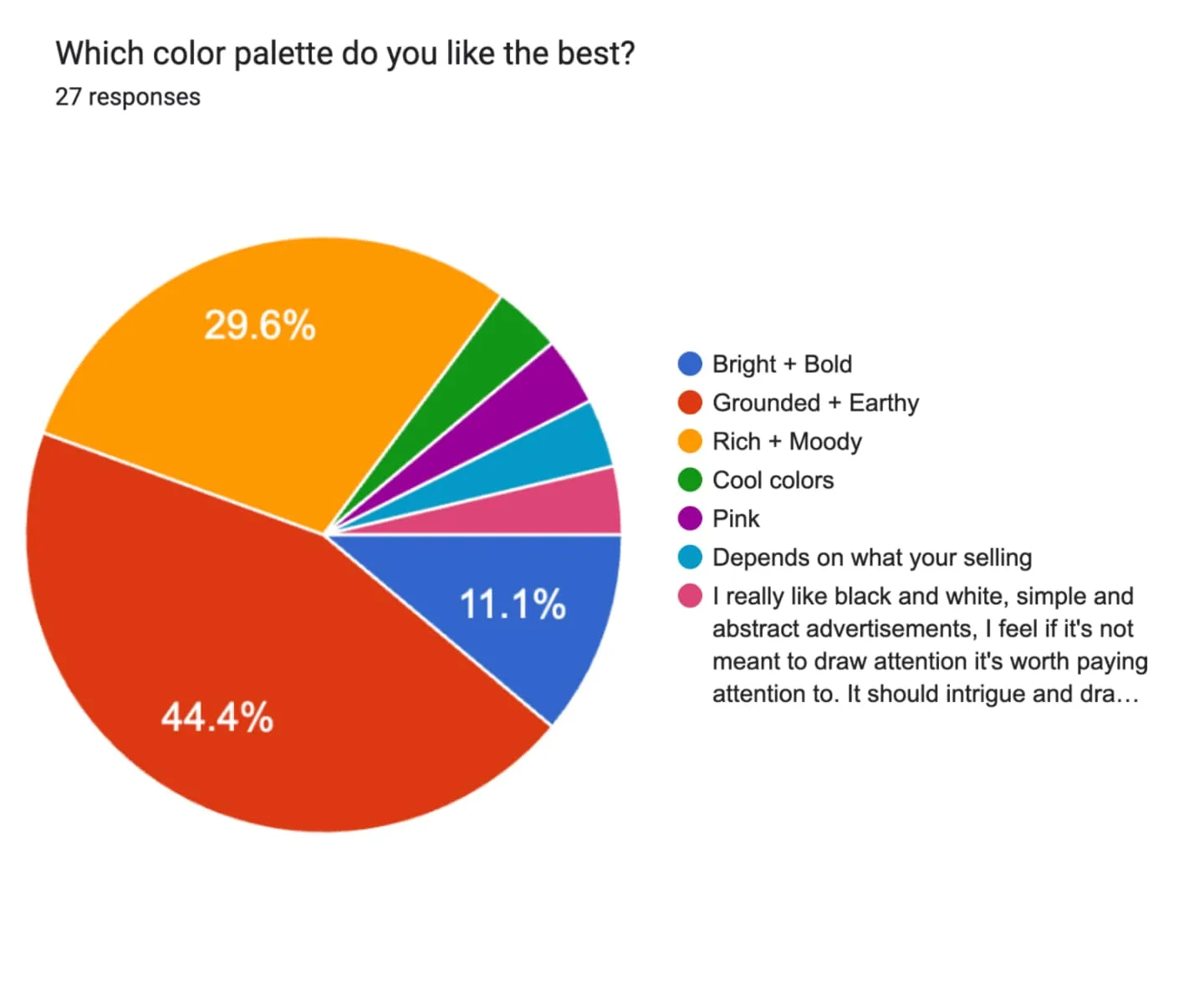
To accomplish this, we conducted a youth survey designed to better understand how young people consume content, what earns their trust, and how they perceive gambling-related behaviors.
The survey validated many of our research findings while providing additional nuance that shaped both the creative process and messaging strategy.
Participants consistently emphasized that they want to be respected rather than marketed to. They responded positively to honesty, transparency, straightforward communication, and real people. Conversely, they expressed strong skepticism toward trend-chasing content, overly polished advertisements, and messaging that felt inauthentic.
We also learned that many youth do not identify themselves as gamblers, even when participating in activities that involve chance-based rewards, wagering, or gambling-like mechanics. Instead, they framed these activities as gaming, entertainment, or social experiences.
Perhaps most importantly, participants identified shame, fear of judgment, and concerns about privacy as significant barriers to seeking help. These insights reinforced the need for a campaign built around empowerment and awareness rather than fear or stigma.
The survey findings directly influenced the campaign’s visual style, tone of voice, content structure, and creative execution.
Campaign Development
Meeting Youth Where They Are
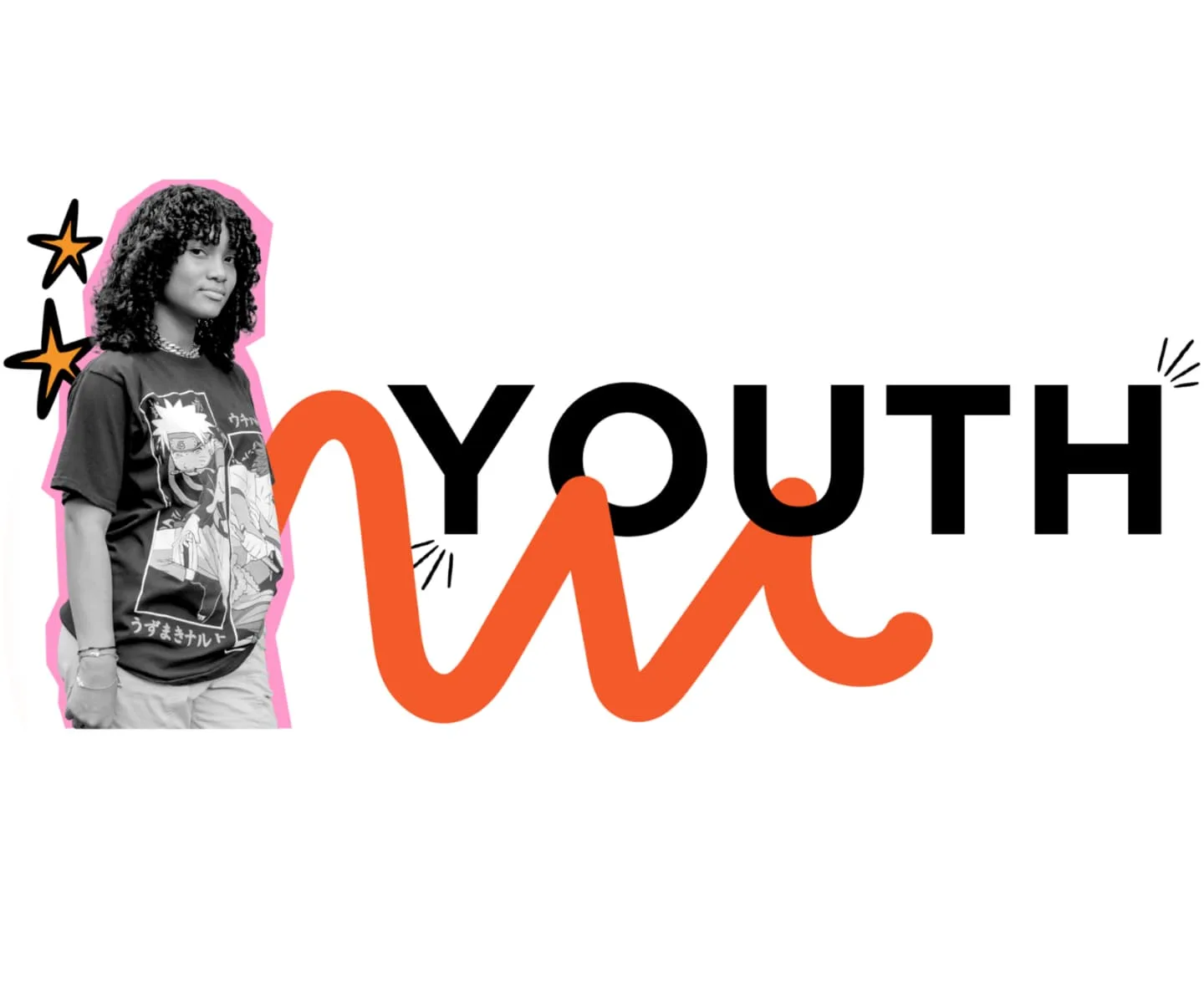
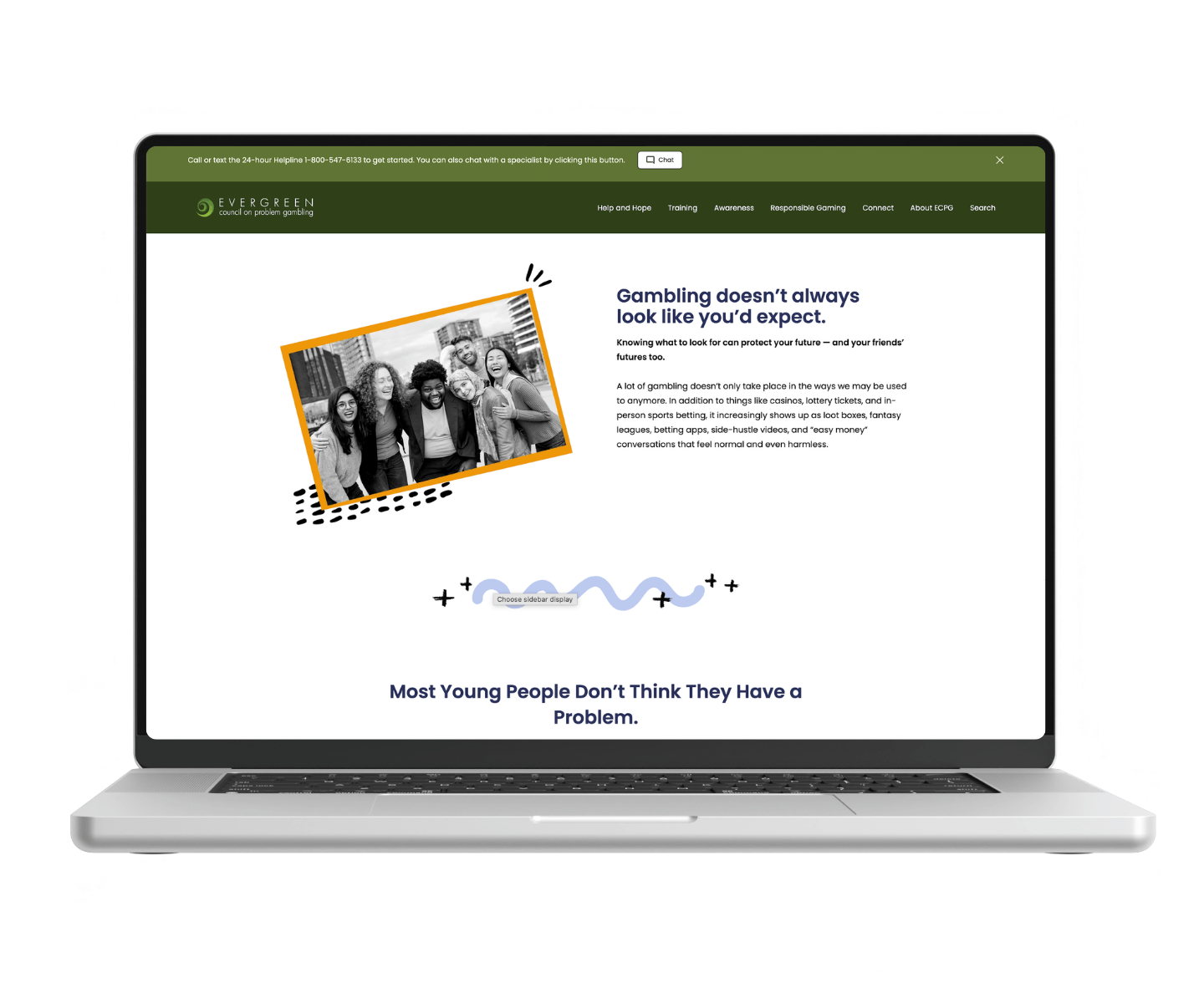
The campaign centered on short-form video content, paid social advertising, educational resources, and a dedicated landing page experience. Rather than relying on shock tactics or worst-case scenarios, the creative focused on helping audiences recognize modern gambling behaviors, understand potential risks, and access resources before problems escalate.
Messaging was tailored for both youth and adult audiences, ensuring that parents, counselors, educators, and coaches received practical tools to support conversations around gambling and gaming.
Social Media & Influencer Strategy: Reaching Youth Through Trusted Voices
Our audience research consistently pointed to the same conclusion: youth are far more likely to engage with content that feels authentic, relatable, and peer-adjacent than with messaging delivered by institutions alone.
Research showed that YouTube, TikTok, and Instagram dominate attention among younger audiences, particularly for short-form video content. We also found that young people place significantly more trust in real people and lived experiences than traditional advertising, especially when discussing topics that can carry stigma or judgment.
Instead of asking youth to come to us, we brought the conversation to the platforms, communities, and role models they already trust.
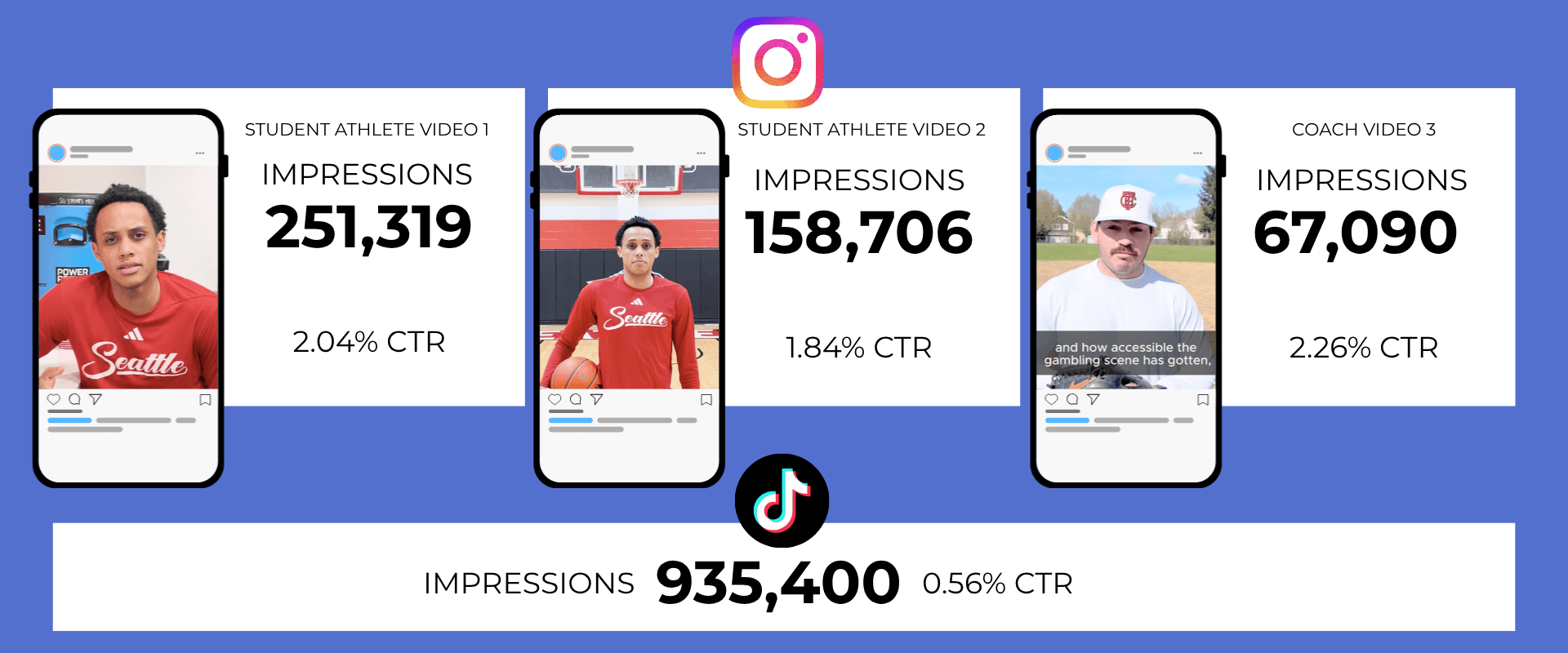
To connect with youth audiences, we partnered with Jeremiah, a rising basketball player at Seattle University. As a young athlete navigating many of the same pressures, influences, and opportunities facing today’s teens and young adults, Jeremiah provided a relatable voice capable of speaking directly to youth about decision-making, discipline, and protecting future opportunities.
Recognizing that youth education requires the involvement of trusted adults, we also partnered with Spencer, a coach with Tacoma Baseball Club. Our research identified coaches, mentors, educators, and youth program leaders as critical influencers in young people’s lives, often serving as trusted adults outside the home.
Spencer’s content was designed specifically for adults who work with youth, helping them recognize warning signs, understand modern gambling risks, and feel more confident initiating conversations around gambling, gaming, and healthy decision-making.
This dual-audience approach allowed the campaign to engage both sides of the prevention equation: the youth experiencing these environments firsthand and the adults responsible for supporting them.

Results
Awareness That Moved People to Learn More
The campaign generated more than 1.5 million impressions across Instagram, TikTok and YouTube, bringing youth gambling-prevention messaging into the digital environments where young people and trusted adults already spend their time.
TikTok delivered the campaign’s greatest scale, reaching 935,400 people and generating 5,508 clicks. Instagram reached another 171,800 people, earned an overall 1.98% click-through rate and generated 11,265 video ThruPlays. YouTube extended the campaign statewide with 72,589 impressions and 11,943 TrueView views across communities including Seattle, Tacoma, Vancouver, Spokane and Yakima.
Most importantly, awareness translated into action. The campaign generated:
- 26,094 campaign landing-page views
- 15,449 paid-social sessions
- 60 form submissions attributed to paid social
- An average paid-social cost per click of $0.51
Together, the results demonstrate that complex prevention messaging can reach younger audiences without relying on fear or stigma.
Building a Campaign for a Hard-to-Reach Audience?
Whether you’re launching a public awareness initiative, engaging younger audiences, or tackling a complex social issue, successful campaigns start with understanding the people you’re trying to reach.
At M Agency, we combine research, strategy, creative development, and media planning to build campaigns that connect with audiences and drive meaningful action.
Let’s talk about your next campaign.